Greta Thomas
Game Programming


Overgrown!
Engine: Unreal Engine
Scope: 100+ Person team from animation and game departments. Year-long school project.
Blurb: Overgrown is a 2.5D RPG set in a natural history museum.
Responsibilities:
-
Programmed Overgrown's designer-friendly projectile and AOE classes.
-
Created written and video user's guide documentation for AOE and Projectile tools.
-
Worked with project lead on enemy behavior and troubleshooting.
-
Implemented 2D sprite sheets and animations on 3D characters.
What I Learned:
I have had an unusual learning development for a SCAD student because Overgrown was my early first introduction to both game tech and team-based game development.
I was invited to the all-upperclassmen Overgrown Team as a sophomore because I had done concept art for the leads the summer before. At that point, I knew I wanted to break into game programming, but hadn't had my first tech class, so I spent our break before winter quarter learning everything I could about Unreal Engine's behavior tree system. While we didn't use behavior trees in Overgrown, the learning process gave me confidence to tackle complicated systems and think in terms of best practices.
From then, I was learning from my peers and specializing based on what my team needed. Overgrown introduced me to Agile, Scrum, Daily Standups, and Perforce.
Overgrown was produced over three quarters as a collaboration class between the Animation and Game departments at the Savannah College of Art and Design.

Documentation:
Projectile Showcase:
Our projectile base class needed to handle unique behavior for Straight-shooting, Homing, and Arcing projectiles. Because there were so many variables, my documentation had to rely heavily on visual aids and sorting the settings into manageable chunks.
Written Projectile Documentation PDF


AOE Showcase:
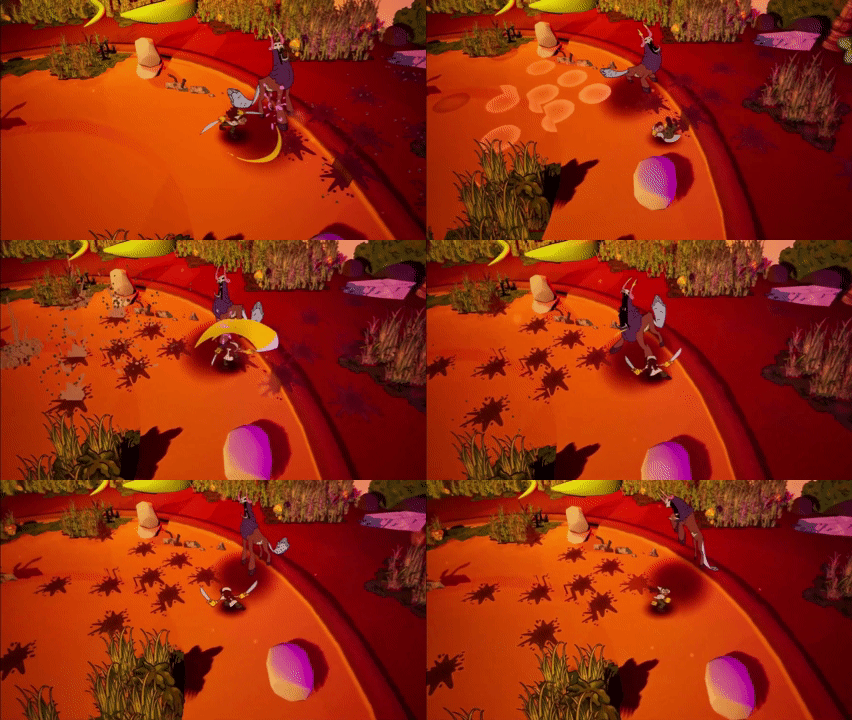
Our AOEs had to vary in behavior whether they were Instant, had a duration, or delayed their blast. Documentation had to handle how these settings overlapped.

Process:
Wisdom of the Cult of the Lamb:
When I started work on projectiles, we did not know what enemies were going to make it into the final game. Our projectile system had to account for anything, but what did "anything" even mean?
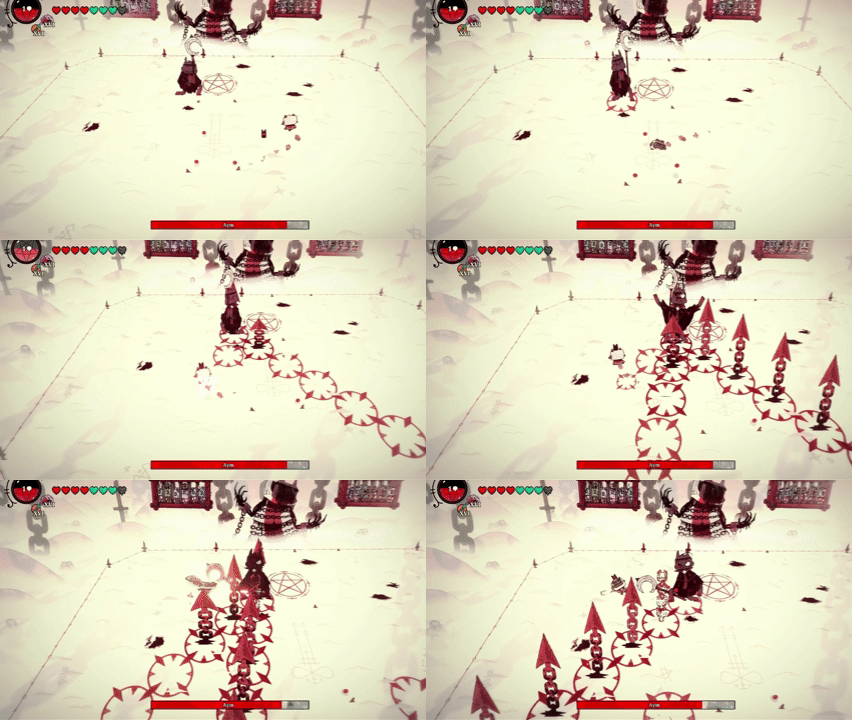
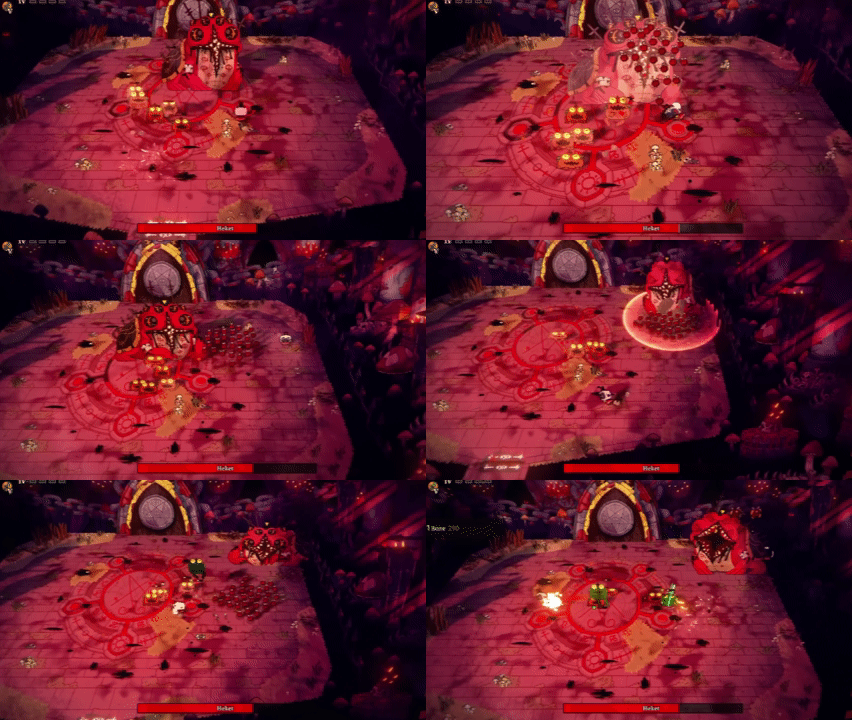
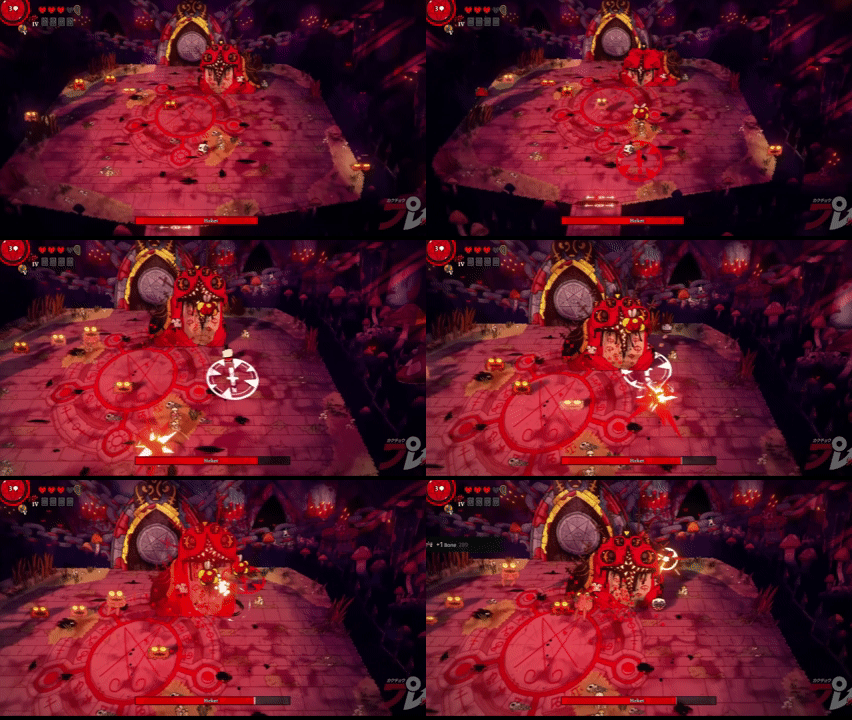
Because we were making a snappy 2.5D combat game, I looked to Cult of the Lamb as inspiration. Cult of the Lamb's enemies have a vast range of attack patterns, but I soon realized they're almost all just a combination of simple projectile and AOE attacks. I built our system around the idea that designers should be able to easily replicate any Cult of the Lamb attacks just by tweaking the projectile and AOE's settings structs on spawn.
AOE Delay:
AOEs needed an option to delay their activation, either by a set time or by a manual trigger. They needed a separate ground effect slot to pop up when spawned, and hold until activated.
Projectile Homing:
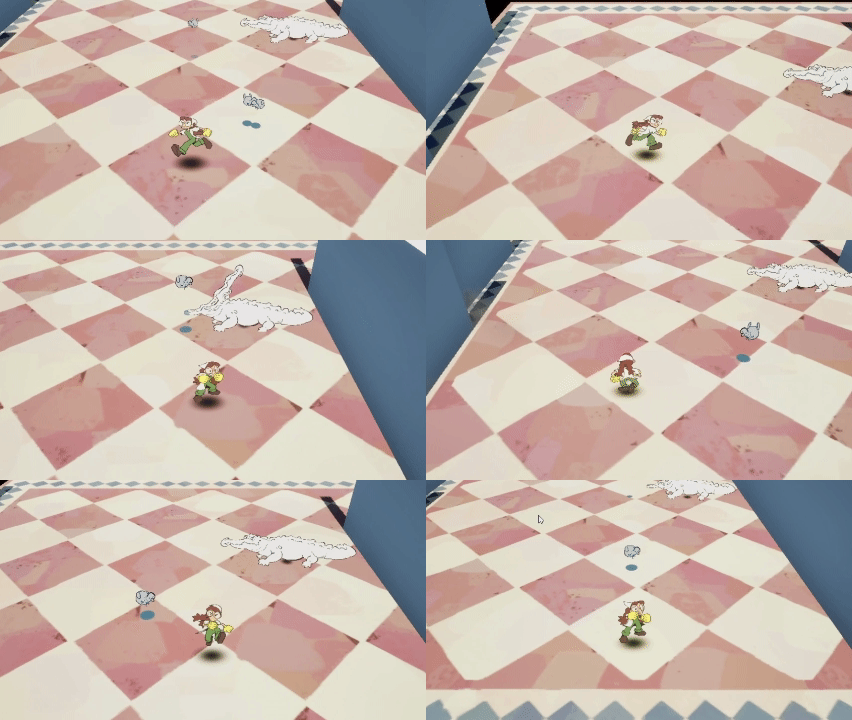
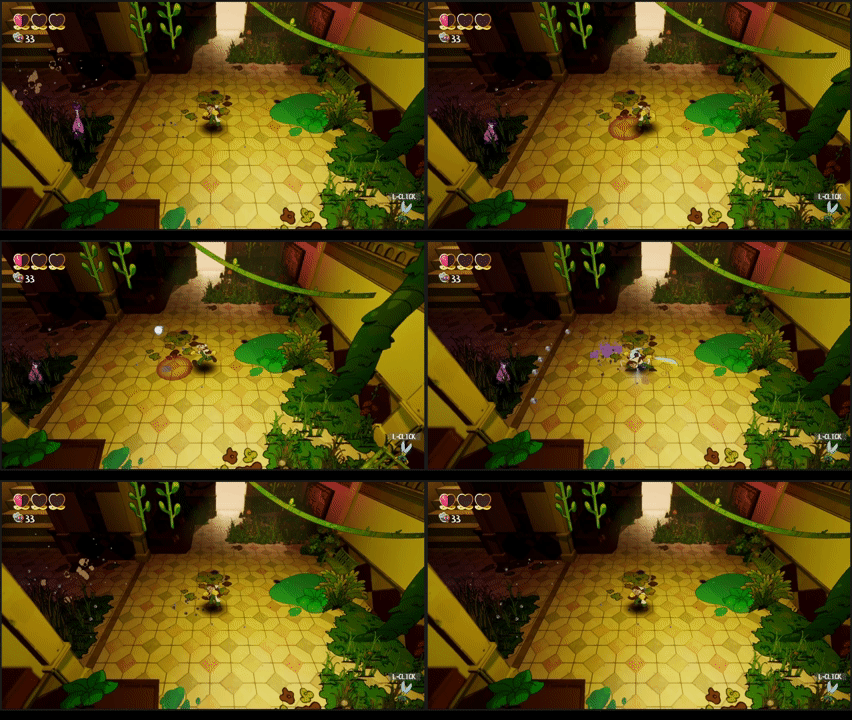
Projectiles need an option to home towards the player. The projectile sprite needs to automatically flip based on its movement direction. The homing strength and duration are configurable.
Ballistics and Telegraphs:
Projectiles need a "Ballistics" option to arc down towards the player. These should combine with an AOE spawned at its landing point, triggered when the projectile touches down, or cancelled if the projectile is destroyed beforehand. If a projectile is hit, it can be set to Ignore it, get Destroyed, or be Parried.